Best Kegging Systems and Kegerators for Homebrew

Kegging homebrew eliminates bottling day entirely and gives you draft beer on demand. A basic setup -- a used Cornelius keg, CO2 cylinder, dual-gauge regulator, and a chest freezer -- costs less than most people expect and pays back in time saved after the first few batches. A dedicated kegerator integrates everything into one unit with a finished look but costs more. We compared kegging components and turnkey kegerators on value, capacity, and how well they handle 5-gallon and 10-gallon homebrew setups.

BrewMason may earn a commission . Updated June 2026
Quick answer

The Kegco K309SS-2 Dual-Tap Kegerator is the best turnkey kegerator for homebrewers who want a finished, standing unit with room for two 5-gallon Cornelius kegs. For the best value on a full draft setup, a used chest freezer plus an Inkbird ITC-308 controller and a quality CO2 regulator beats any all-in-one unit on total cost.

Top Pick Amazon Taprite T742HP Dual Gauge CO2 Regulator
4.6

Taprite T742HP Dual Gauge CO2 Regulator

The most recommended dual-gauge CO2 regulator in homebrew kegging forums -- shows both tank pressure and serving pressure with a reliable safety relief valve.

Best for First-time kegging homebrewers who need a reliable, accurate CO2 regulator at a fair price.

Dual gauges show tank pressure and line pressure simultaneouslyReliable and accurate at standard serving pressuresSafety relief valve prevents over-pressurizing equipment
Best Value Adventures in Homebrewing Kegco K309SS-2 Dual-Tap Homebrew Kegerator
4.5

Kegco K309SS-2 Dual-Tap Homebrew Kegerator

A dedicated homebrewing kegerator sized for two 5-gallon Cornelius kegs, with dual taps, digital temperature control, and a stainless drip tray -- the complete turnkey draft solution.

Best for Homebrewers who want a finished, professional-looking dual-tap draft setup with no DIY required.

Sized specifically for two 5-gallon Cornelius kegsDigital temperature display with dual-tap tower includedStainless drip tray and professional finished appearance
No. 3 Adventures in Homebrewing Ball-Lock Cornelius Keg 5-Gallon (New)
4.5

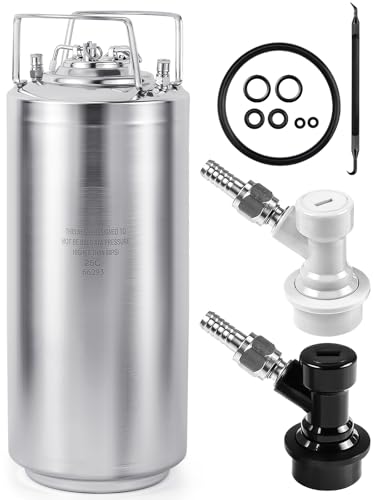
Ball-Lock Cornelius Keg 5-Gallon (New)

A new stainless 5-gallon ball-lock Cornelius keg with all-new lid o-ring and posts -- the standard homebrew keg format compatible with all ball-lock disconnects and draft lines.

Best for Homebrewers setting up their first draft system or adding a keg to an existing setup.

New o-ring and posts eliminate the leak-chasing of used kegsBall-lock format works with all standard homebrew draft equipmentStainless steel construction handles pressure and cleaning well
No. 4 Amazon Luxfer 5 lb Aluminum CO2 Cylinder (Empty)
4.5

Luxfer 5 lb Aluminum CO2 Cylinder (Empty)

A standard 5 lb aluminum CO2 cylinder for homebrewing draft systems, sized for 1 to 3 Cornelius kegs and small enough to fit inside most kegerators.

Best for Homebrewers building their first draft system who need a standard CO2 cylinder to pair with a regulator and kegs.

Standard 5 lb size fits inside most kegerators alongside kegsAluminum construction is lighter than steel cylindersDOT certified -- accepted at most gas suppliers for refill
No. 5 Amazon Kegco Complete Ball-Lock Draft Line Kit
4.4

Kegco Complete Ball-Lock Draft Line Kit

A complete draft line kit including ball-lock disconnects, 5/16-inch beer line, a picnic tap, and a drip tray -- everything needed to pour from a Cornelius keg without a full kegerator.

Best for Homebrewers setting up their first keg system on a tight budget without committing to a full kegerator.

Everything needed to start pouring from a Cornelius keg in one kitPicnic tap is portable for homebrew club meetings and eventsEasier entry point than a full kegerator for a first kegging setup
No. 6 Amazon Inkbird CO2 Dual Gauge Draft Beer Regulator
4.3

Inkbird CO2 Dual Gauge Draft Beer Regulator

An affordable alternative to the Taprite dual-gauge regulator with the same basic dual-gauge design and a lower entry price.

Best for Budget-conscious homebrewers who want a functional dual-gauge regulator to start kegging without overspending.

Lower price point for budget kegging setupsDual gauges for tank and line pressureIncludes a 5/16-inch barb for standard beer line sizes
The method

How we chose

We evaluated each option on feel, build quality, and value. Our top pick, Taprite T742HP Dual Gauge CO2 Regulator, earned the spot because the community-recommended regulator -- solid, accurate, and fairly priced for a first kegging setup. The comparison above highlights exactly who each pick is best for.

FAQ

Best Kegging Systems and Kegerators for Homebrew: FAQ

What do I need to start kegging homebrew?+

You need at minimum: a Cornelius keg in good condition, a CO2 cylinder (5 lb is most common for 1 to 2 kegs), a dual-gauge CO2 regulator, ball-lock disconnects, beer line, and a picnic tap or draft tower. A kegerator or keezer keeps it cold. Budget around $300 to $500 for a complete first setup buying smart on used gear.

Ball-lock or pin-lock Cornelius kegs, which should I buy?+

Ball-lock. Pin-lock kegs originated from Pepsi and have fewer accessories, shorter profiles, and fittings that do not interchange with ball-lock gear. Ball-lock kegs from Coke-system sodas are more common, have a larger aftermarket of lids, posts, and dip tubes, and are what most homebrew shops stock. Unless you find a great deal on pin-lock kegs, buy ball-lock.

How much CO2 does a 5-gallon keg use?+

Carbonating one 5-gallon keg from flat uses roughly 1 to 2 oz of CO2. Serving that keg adds roughly another 1 to 2 oz over its life. A 5 lb CO2 cylinder holds 80 oz, so you can carbonate and serve roughly 20 to 40 kegs per fill. Actual use varies by serving pressure, line length, and how often you open the tap.

Can I convert a chest freezer into a kegerator?+

Yes, and it is the most popular homebrew keezer build. You need a chest freezer (a 7-cubic-foot model holds about 4 Cornelius kegs), a temperature controller like the Inkbird ITC-308 to hold fermenter temperature without freezing, CO2 lines routed through a small hole with a grommet, and a collar or tower on the lid for taps. Total cost is usually $200 to $350 including the freezer.